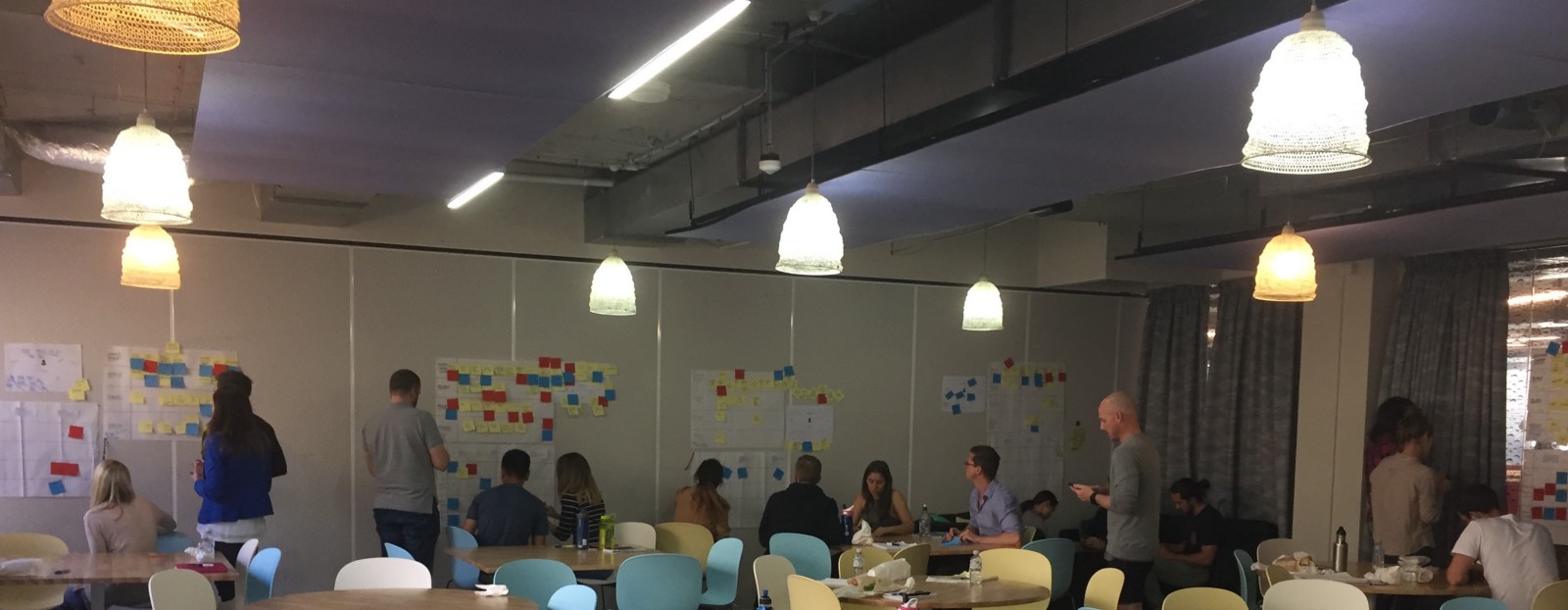



I gave a 10 minute talk at UX Austrlaia 2016 on my PhD work — Insertables. The audio is available on Sound Cloud and this post covers most of what I talk about.

Whether I’m coaching an associate designer or managing an experienced team, my role is to build trust and psychological safety and help people thrive. The same curiosity I bring to understanding users is the mindset I bring to understanding the people I lead.
I’ve collected tactics over many years through self-directed learning (talks, readings, podcasts), structured professional development (conferences, courses, Melbourne Business School) and from other leaders.
You’ll notice a pattern in every tactic. None of them involves guessing.
They also aren’t forms to complete or assessments to run. They’re structured conversations to have with your team members, individually, early in your journey together
Design hire number one and don't know what to do? Read about the 6 steps I used to set up a design practice from scratch
If no one is listening, it's probably a design problem. The tips in the article will help you craft messages people can actually understand and act on.
Is your style guide being ignored? It’s not just a branding issue — it’s a usability problem. Learn why consistency is core, not optional — and how to get teams on board.
In 2015, I embarked on the journey of buying my first home. At that time, I wrote a blog post critiquing the UX of real estate websites through a, somewhat sarcastic, persona named ‘Kayla’ and listed out ‘her’ (my) user needs and how they weren’t being met. Discover how real estate websites have evolved from 2015 to 2024 through a personal lens. Spoiler alert – it still sucks, but it sucks a little less.
In this blog post, I evaluate how current real estate platforms address user needs such as viewing new properties, staying within budget, accessing accurate information, and managing inspection schedules. It suggests key improvements and practical recommendations for improving real estate website UX.
We often make assumptions about blind users, however blind users are not homogenous. They differ as much as sighted users in terms of technical ability and search strategies. Just as not every sighted person is tech savvy, not every blind person knows how to use a screen reader well, or utilizes all the power features. This literature review explains the online and search behaviours of blind individuals
We use colour as a signifier for people, places and things all the time. Probably more than you realise. About 8% of Australian males and 0.4% of females are colour blind. Like all people with ‘disabilities’, there are certain things colour blind people can’t do. Design can help make the world more accessible to ensure they can do everything those with ‘normal’ vision can. I explore ways to deign for colour blind users, which often improves the experience for everyone.
gave a talk at UX Australia 2016 in Melbourne (August 25–26) . No one sets out to intentionally design a system that is hard to use for — or worse, excludes or discriminates against — some users. Designers are trying their best. You’re probably a good person, but a human nonetheless, therefore not perfect. Design can only be as good as the people who make it. Conversely, design is as flawed as the people who make it.