Research
This page showcases my academic research.
While I have an academic research background, UX research needs to be pragmatic and lean – we are researching to make the next best change in a product, not to publish. I can use lean methods, measure real customer behaviour, and track metrics.
Learn more about me or view more of my work: UX, Public Speaking, Leadership (coming soon!)
Insertable devices
My PhD research explored the use devices inside the body for non-medical purposes. I charted what is technologically possible, how people are using these technologies and how that compares to public discourse and fears about the technology.
Improving Vitamin D status
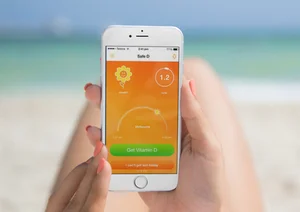
My master’s designed an app for young women aged 16-25 to be used by the Royal Melbourne Hospital in a trial. The app provided tailored recommendations for safe UV exposure to improve vitamin D status.
OTHER PUBLICATIONS
Crowdsourcing for Clinical Research – An Evaluation of Maturity HIKM 2014
Latest post on research
A quick note on setting expectations and increasing participant comfort (without leading)
More strategic or risky projects often require more evidence to back them up. Traingulating your insights gives stakeholders more confidence to make decisions and to make decisions that they feel more sure of.
Bugs, put simply, are errors or defects in a software system. If you work in tech, you’ve probably heard someone say the half-joke, half-truth line “it’s not a bug, it’s a feature”. Often this is used in jest or to justify not wanting to fix a particularly difficult bug. But when is a bug really a feature? And what does this mean for your users?
Sometimes it feels that UX Research has become synonymous with surveys. They’re cheap, easy & can reach large amounts of users. Sounds great, right? Wrong. Surveys are not enough
“Design thinking” and “the double diamond” are perhaps some of the most abused terms in tech today. While exploring more than one solution is a step in the right direction, design thinking without design research is only a quarter of the way there…
It’s only 5 people. That’s an assumption. It's just opinions. UX research isn't _real_ research. Sound familiar? Yeah, us too. That's why Caylie Panuccio and I wrote this post. If you’re a UX Researcher this article will help you fight some battles. If you’re not, it will help you understand the validity of qualitative research methods a little better.
As with everything, practice makes perfect, and while I’ve conducted hundreds of sessions, I hadn’t conducted any with blind users. Armed with secondary research as preparation, I felt pretty confident going into them and learned some lessons along the way to improve next time. Here’s what I learned
Icons are everywhere. But what do they mean? When do I use an icon, and when do I not? What icon means save - a floppy disk, a star, a heart, a pin, a bookmark…? 💾⭐️❤️📌🔖 Read on to find out
After just 0.1 second users start to perceive a delay if your app isn’t doing The Thing™ that they just told it to do. We needed to buy 8.5 seconds. We had to manipulate (percieved) time.
We’ve trained users with the five or seven point Likert scale survey questions, where the middle point means “neither likely nor unlikely”. Yet on the NPS a 5 does not mean "neither" it means the users is a detractor. Does the NPS tell us what users really mean?
The human body has emerged as more than just a canvas for wearable electronic devices. Technological size and cost reductions, along with power and battery improvements, has meant items that were once external have become wearable, and even insertable.
In part 2 we look at our results - what are participants inserting and what does this mean for the future of HCI & UX?
The human body has emerged as more than just a canvas for wearable electronic devices. Technological size and cost reductions, along with power and battery improvements, has meant items that were once external have become wearable, and even insertable.
Part 1 gives background to my research to be presented at the CHI conference in San Jose this week.
Empathy empowers us to be better designers — when we understand the user’s perspective, we make products that are better suited to them. At SEEK we have a variety of means to build empathy...
Bad products make users feel stupid, but normal users blame themselves, not the bad design. Stop blaming your users.
Let me introduce you to quantum UX: Schrödinger's interface.
Your interface is both excellent and horrible, usable and unusable, at the same time. It is not known which until it has been tested with users and observed.
McDonald's Australia has gone high-tech and is competing with gourmet burger chains of Australia. How does the experience stack up?

6 tips to overcome a resistant company culture to get the user insights you need