Public Transport - User Needs Analysis
Analysis of metro-Melbourne commuter’s needs and how well current technologies are meeting these. This was performed for a masters-level HCI course.
UX process
Part 1: Understanding the problem
Conducted interviews with public transport users to understand goals, problems, issues and technology used
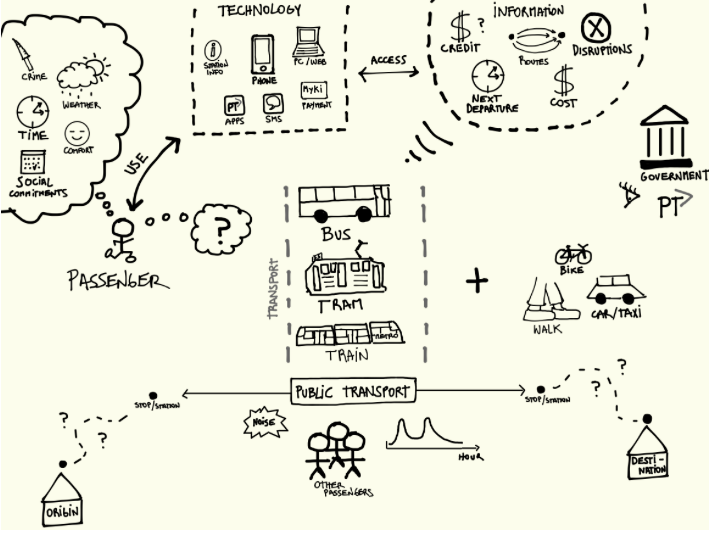
Created a rich picture to understand the problem
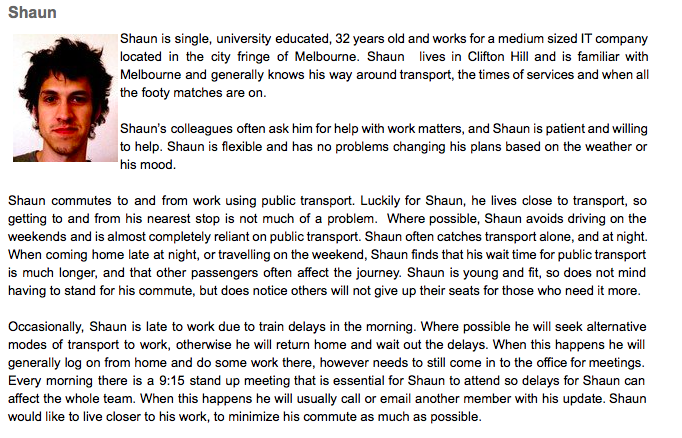
Created personas to understand the users
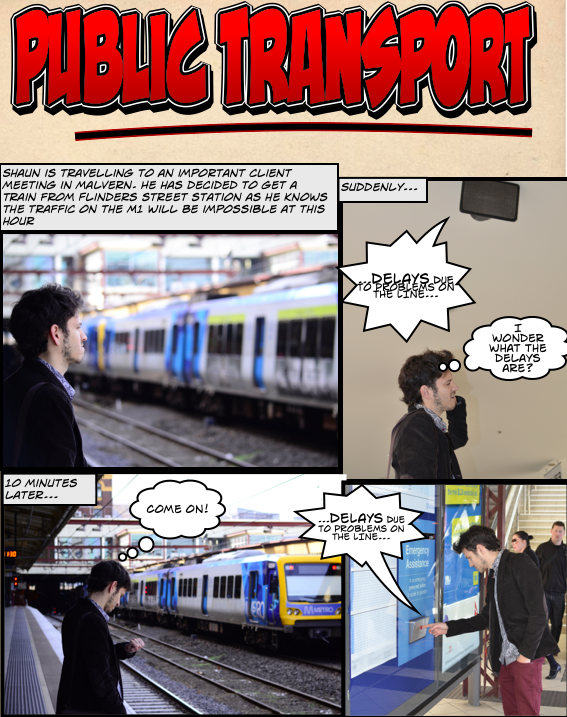
Created picture scenarios to understand the problem from the users point of view
Part 2: Evaluate current technology
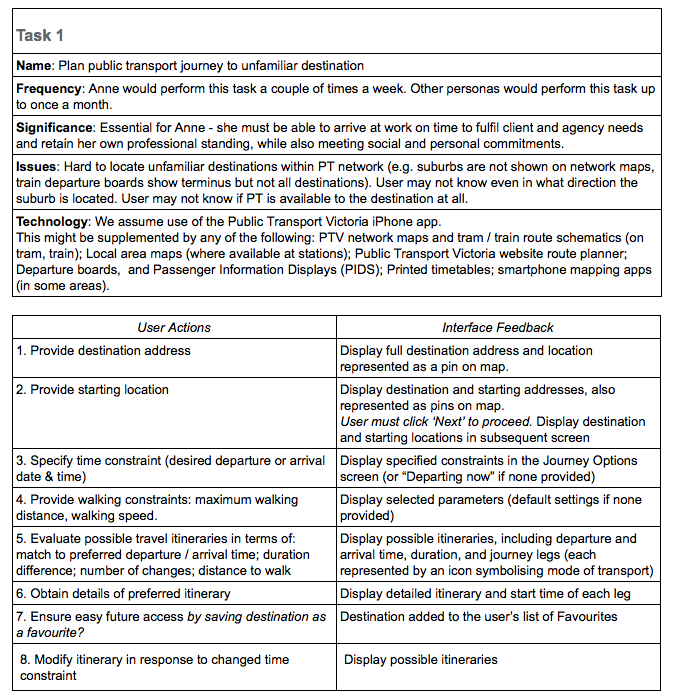
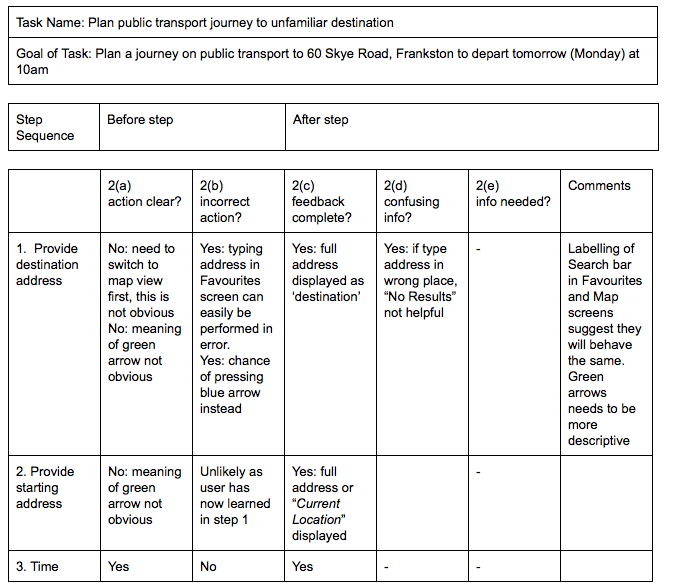
Created tasks - step by step instructions of user actions and expected system responses
Conducted cognitive walkthrough (CWT) by performing each task and identifying if:
The task was clear
Incorrect actions were taken
Feedback was complete
Information was clear
No more information was needed
Clear action complete
Identified opportunities from results.
Results
Current public transport usage:
Weekday travel:
50% work commute
50% university commute
Weekend Travel
83% personal commitments
17% work and personal
0% work only
Current technology used regarding public transport:
83% tried some sort of Smartphone app to obtain transport information
67% used an app consistently and 33% classify usage as 'frequent'
50% used PTV websites and 0% used it consistently
33% used non-digital resources (broachers, station based information)
Low conversion from first time user to regular users suggested current technology was not meeting needs.
CWT findings
Mapping issues: confusing placement of controls
Poor affordances: lack of visibility and unclear iconography
Conflicting information: timetables were not real-time so differ due to disruptions.
Opportunities:
Localised information
Geolocalisation for nearby information to display
Push information vs the current pull of the PTV app.
Artefacts created